Jíjí Rúlǜlìng: The Original Meaning of Rúlǜlìng
Did East Asian Ghosts Submit to Human Authority from the Beginning?
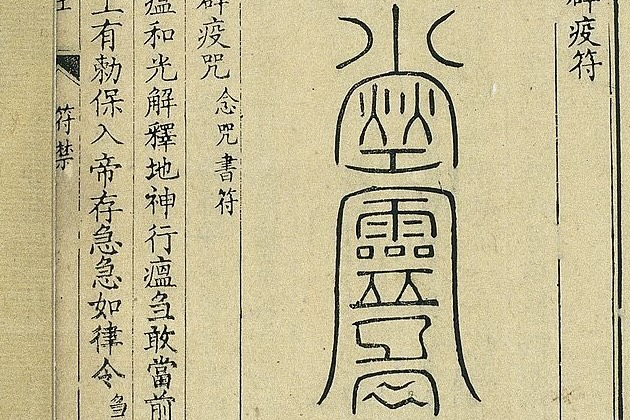
The phrase “jíjí rúlǜlìng” (急急如律令), used in incantations to expel ghosts, literally translates to “handle this urgently according to the statutes and ordinances.” The portion meaning “according to the statutes and ordinances”—rúlǜlìng (如律令)—was originally a formulaic phrase used to close official documents during the Western Han dynasty. For this reason, in East Asia with its strong bureaucratic tradition, there’s a common interpretation that ghosts are vulnerable to governmental authority. This interpretation seems plausible given that numerous stories—from the Yuan dynasty play Gan Tian Dong Zhi Dou E Yuan (《感天動地竇娥冤》, The Injustice to Dou E) to the Joseon era tale Janghwa Hongryeon Jeon (《장화홍련전》, The Story of Janghwa and Hongryeon)—feature female ghosts who were wrongfully killed appealing their grievances to human officials.
However, when we examine Han dynasty examples of rúlǜlìng being used as incantations to control ghosts, it appears this was not originally intended to invoke human governmental authority to ward off malevolent spirits. This can be seen in gaozhi tablets (告知策, notification documents), stone-inscribed maidi quan (買地券, land purchase contracts), and zhenmu wen (鎭墓文, tomb-quelling texts) discovered in multiple Han tombs. The phrase rúlǜlìng repeatedly appears at the end of these land purchase contracts and tomb-quelling texts.
To understand the context in which rúlǜlìng was used here, let’s first briefly examine what these three types of documents mean (Hong Seunghyeon 2022:98):
- Gaozhi tablets: Notification documents sent to underworld officials and deities when the deceased passes from this world to the next.
- Maidi quan: Certificates proving contracts made between the deceased and other dead.
- Zhenmu wen: Soul-pacifying texts (zhenhun wen, 鎭魂文) that appease the deceased’s spirit, protect the living from malevolent ghosts, and suppress suspicious energies around the tomb.
These three types of documents all share the characteristic of being addressed to underworld officials or deities (Hong Seunghyeon 2022:103). Indeed, many gaozhi tablets explicitly name underworld assistants (dixiacheng, 地下丞)—underworld counterparts to prefectural governors and county magistrates—as recipients. The recipients of maidi quan rose even higher in rank to dixia erqianshi (地下二千石, underworld two-thousand-shi officials, equivalent to prefectural governors). Zhenmu wen mention corvée labor and taxes that the deceased must pay in the underworld. Notably absent are officials from the world of the living.
Given this context, we can surmise that the lǜlìng (statutes and ordinances) in rúlǜlìng found in maidi quan and zhenmu wen buried in tombs refer not to the laws of the living world but to those of the underworld. Of course, Han people likely believed that the content of laws in the living and dead worlds didn’t differ much. However, the authorities to which the dead and ghosts were subject appear to have been underworld officials, not officials of the living world. Zhenmu wen in particular express fear of “the dead dragging the living to the underworld” (Hong Seunghyeon 2022:135). Han people thus wished to thoroughly separate the realms of the dead and the living, and would likely have been frightened if the dead were managed by offices of the living world.
That said, stories like Dou E Yuan and Janghwa Hongryeon Jeon, where ghosts appeal their grievances to human officials, can also be found in the Hou Hanshu (《後漢書》, Book of the Later Han), which chronicles the Later Han dynasty. However, officials in the Hou Hanshu only set out to vanquish ghosts and other anomalies (yiwu, 異物) when they “entered the realm of human awareness by causing harm” (Jeong Jihyeon 2016:156). Unlike the medieval Dou E Yuan and similar works, they responded using methods specialized for dealing with anomalies, actively employing magic alongside the governing principles and laws of the human world (Jeong Jihyeon 2016:153). It seems difficult to control ordinary anomalies through the authority of human laws alone.
In conclusion, based on Han dynasty underworld documents and the contents recorded in the Hou Hanshu, it seems more appropriate to interpret the lǜlìng in jíjí rúlǜlìng as laws governing the spirit world rather than governmental authority of the human world. It would be interesting to investigate how this changed after the Han dynasty. Given that the Soushen Ji (《搜神記》, In Search of the Supernatural), compiled during the Eastern Jin period, was initially regarded as a history book of the ghost world and dealt with underworld bureaucratic systems and corvée labor much like the Han dynasty, if changes occurred, they likely began in earnest after the Northern and Southern Dynasties period.
References
- Jeong Jihyeon. (2016). A Study on Supernatural Narratives in the Histories of the Two Han Dynasties. PhD dissertation, Department of Chinese Language and Literature, Seoul National University.
- Hong Seunghyeon. (2022). The Social History of Stone Inscriptions: Ancient Chinese Desires and Their Records. Hyean Publishing.